‘David, are you all right?’ I look up from my desk at work, engrossed in what I was doing I hadn’t heard my colleague approach. ‘It’s just that you haven’t sworn under your breath all day.’
Back in London residue lingers, but as the days become weeks all the usual mess of life reasserts itself. My plans for time to be spent writing slip further into the distance, becoming increasingly more abstract - much like the words themselves. I want to write, but there always seems to be something else that needs to be done.
Every time I sit down at the computer the words refuse to come in anything other than the most disjointed, unsatisfactory fashion. Invariably it is too late at night and I’m trying to cram work into the day’s small corners. It’s not a successful tactic. I write and when I read it through I delete it all again. The page remains blank. I get up early on the weekend and try to make some sort of progress, but the harder I try the more it refuses to hang together and the more head-bangingly frustrated I become. Finally, I grind out a first draft of the first section. It’s okay as a statement of intent, a narration of Brutus of Troy’s discovery of Albion and the slaying of the giant race that lived here culminating with the tumbling of Gogamagog into the sea off the Cornish coast. I make some neat comparisons with the play Jerusalem which I saw, and loved, in January. Then a recounting of Boadicea’s failed uprising against the Romans and the questions of whether she’s really buried between platforms nine and ten of King’s Cross station. It’s okay, but it lacks any real spark. It’s flat and lifeless even when I’ve introduced Harry Noble and Charles Dickens’ soul has arrived in the post. There’s a bit about the election, but not much. I feel nowhere near as plugged into the news as when I wrote How to Lose an Electorate, but I don’t seem able to find the time to jack myself into the system for more than a cursorily glance.
I print a copy out and put it in my bag intending to do an edit one lunchtime. Two weeks later it has instead become a crumpled rumple with a small stain from an overripe apple on the front page. I can’t get any flow going.
I start to ride my bike into work every day hoping that, as well as getting me fitter, it will be a way of connecting me back to the city. The rhythmic pulse of peddling along the streets will draw the essence of London to me, will write copy for me. If only it worked like that. Instead, I concentrate on getting my journey time down which, given that I returned from India with a heavy cold, means every red light directed pause is spent hacking muck out of my lungs and heaving across the handle bars rather than observing the life around me. Plus it gets dull real quick. The most direct route in is straight up the Old Kent Road, a jink through pretty Borough, over Blackfriar’s Bridge and up Chancery Lane. The slog along three lanes of bus , lorry and lycra loon clogged New Cross, Peckham and Elephant is good fitness work, but it lacks charm. There’s little happening here beyond people looking to get elsewhere.
The work-out physically strengthens me up but seems to also mentally weaken me. I lose an hour’s reading every day. Unlike walking I can’t get lost in the ideas in my head. Too much attention has to be paid to cars and, more pertinently, psychotic racer bikers who attempt to mow me down.
It’s not just me finding the election uninspiring. The straight replay of Boris versus Ken with Brian lurking on the fringes and a slightly changed supporting chorus of minor parties fails to even fire up media normally desperate for something, anything to cover. I can’t stand the idea of the blonde mop topped self-important clown prince of politics winning a second term and yet the closer we get to polling day the more Ken seems an utterly redundant figure from the man who he had once been. Scandal after scandal, accusations of hypocritical tax dodging, anti-Semitism, false tears at a video of actors pretending to be Londoners as well as seemingly unworkable election promises make him increasingly unappealing. It’s like there’s an overwritten script in his head which plays out the drama of an election lacking it but there’s no director and no audience. Both Ken and Boris sculpt their campaigns around not being the other. The animosity builds until they engage in a slagging match stuck in a lift without minders in front of Green candidate Jenny Jones and even this absurdity play fails to inspire me or just about anyone else.
More and more I regret not saying something when I had the chance. A few months ago, when I walked past Boris, paused on the side of the road outside the strange bomb bunker-like Eisenhower Centre between Tottenham Court Road and Gower Street. I could have told him what an idiot I thought he was, how all his so-called achievements are either things he inherited from the previous administration or things that have made the city worse. Things like wasting million pounds on scrapping bendy buses and introducing new route-masters, the damp squib of the blue super cycle highways cut back beyond recognition from their original plan, the removal of the western congestion charge zone (leaving aside that I got a fine in its last week operational) and the petty point scoring banning of the drinking of alcohol on public transport like we’re a city of naughty children who just can’t behave like adults. He was perched on his bike, hair spurting through the slats on his helmet, shirt partially untucked, engaged in conversation with a pedestrian. Behind him a car presumably packed with flunkies and aides had illegally pulled over to the side of the road and a taxi was struggling to edge its way past. I should have said something, but I was late and so hurried onwards.
And Harry bloody Noble: what’s he doing in the middle of all of this? Why I am trying to shoehorn a fictional distortion of myself into a blog? Why am I crossing the lines in my writing from one sort to the other? He sits like the proverbial elephant in the room, always just out of sight, fiddling with his lighter and reminding me of my failure to get him read by a wider audience.
Failure. I’ve been thinking about that a lot recently. Things I could have, should have, done better. Sooner. Quicker.
‘How does it feel to be back?’ someone else at work asks.
‘Oh you know. I’d rather still be out there,’ I reply because it’s the sort of thing you’re supposed to say about holidays, isn’t it? But it’s true. Sort of.
In India I daydreamed about London, but in London, especially when at my desk trying to write about her, I ponder about India. Don’t get me wrong. I understand that the reason it’s so much easier to get out of bed at four o’clock in the morning on holiday, free of the wine fog, is because you’re off to do some amazingly different thing and as soon as there’s any sort of routine then the old complaints return. And it’s not as though I’ve found myself in a three week jaunt staying in middle class bed and breakfasts travelling around on a self-directed whistle-stop tour. (I often think if I did actually find myself I wouldn’t like me very much.) But there’s something nagging me about why it took me so long to go to India and how am I ever going to fit all things I want to do into the one life I’ve got.
Over a few weeks, I roughly map out the history of London I want to cover. The arrival of the Normans and the building of the Tower; the rise of the Globe theatre and the culturally creative space that the city creates; Samuel Pepys, the plague and the fire giving birth to a new city; the commercial centre of the docks and the long slow decline from warehouses and cottages to fragile pillars of glass sustained by ambition and borrowed money; Dickens’ own period, the Victorian age and the development of a modern city of public transport and integrated waterways and local politics but at the same time our modern inclination to reflect too positively on the period through some kind of strange Victoriana meta-fictional universe which keeps growing, where real and invented walk side by side re-imagined a hundred plus years later; the long twentieth century’s history of bombs from Zeppelins to the Blitz, from Irish dissidents to a mild July morning in 2005; and finally the endless circle of life and death which makes London both continually new and incapable of escaping its past.
I do some research around old childhood nursery rhymes, the strange phenomena of Springheeled Jack, Gog and Magog’s presence on the Lord Mayor’s coat of arms and the burial of Saxon King Lud under the Aldgate. Coincidentally it turns out to be the bicentenary of Dickens’ birth and so the BBC helpfully provides source material, not least Armando Iannuci’s documentary which I watch whilst ironing and pilfer ideas from. The theft itself discourages me, disgusted with my own lack of originality. The result of this procrastination is that it is all simultaneously too much and also not enough. I’m not even scratching the surface to get it right. There’s no way I’ll be able to accurately represent neither the past nor a flavour of Dickens’ writings in a few short hours of casual reading. But I try anyway and over a week grind out all eight chapters, telling myself that it’ll be okay. I’ll publish them in quick succession and that the different writing format of all at once will be an interesting experiment. The fact that I am avoiding the normal approach to a blog where instalments are followed by feedback which is similar to how Dickens wrote for magazines has a certain irony which is not lost on me.
And all the time, the first draft of the first chapter remains unedited in my bag.
‘I don’t think there’s even one decent sentence in any of this,’ I complain one evening and my girlfriend looks sympathetic, but I know I’m being self-indulgent. And so the page remains blank, the election is two or three weeks away and I am no closer to publishing anything. I am worried that either I have nothing to say or insufficient strength to find a way to say it. I am not sure which is worse.
Tuesday, 24 April 2012


Monday, 16 April 2012
Thinking about London in India and back again (part 1 of 3)
I have been staring at a blank page for days.
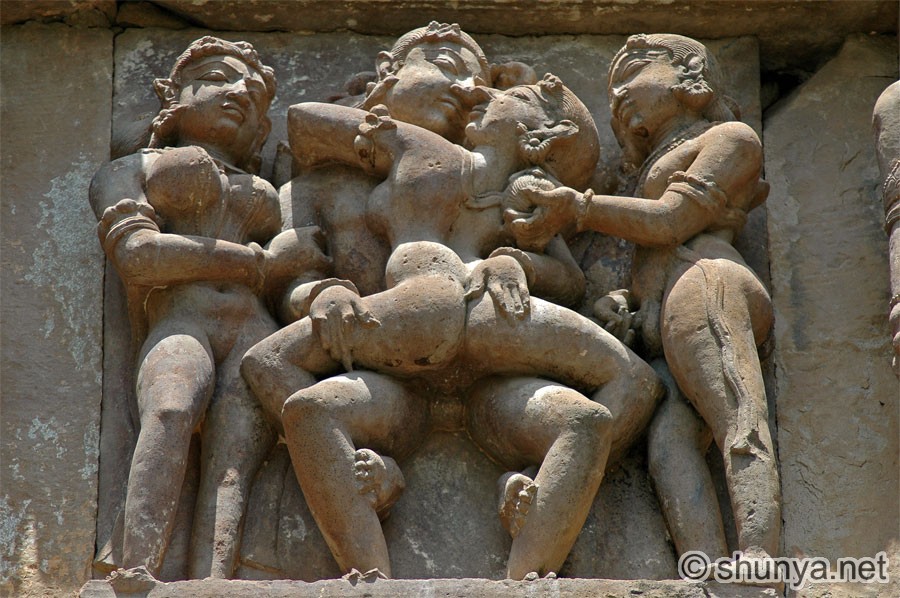
Two months ago, we rattle into Satna, in North Eastern India, just as dawn was breaking. The station was almost deserted in this relatively small and obscure town, a place where anyone arriving and no involved in the production of cement is likely to be on their way to somewhere else, either one of the neighbouring tiger reserves or further still to Kharajuro’s collection of early medieval temples adorned with statues showing elaborate sexual aerobics. We transfer from train to taxi with some rudimentary bartering and an insistence that we do know where we want to go. Outside it is surprisingly cold. I am wearing a fleece and still the iced air pricks at my torso. There is a light frost on the car’s windscreen which needs to be cleared before we can set off with a gentle rock across the poorly paved roads, lolloping with the potholes and uneven camber. The sunlight is turning vibrant orange as it splinters across the horizon bathing the distant trees and mountains in its light. Along the roadside, amongst the litter, mooching dogs and cow dung, men squat down and cluster around fires of burning plastic. Polythene mixed with wood kindling is particularly popular for the speed with which it ignites and the intensity of its burn. They wear cotton trousers holing along the stitching and shirts with burn marks at the cuffs. I feel guilty to be so wrapped up and in a car no less. The driver wears a woollen hat, scarf and jacket the whole way. The heaters don’t appear to work so he wipes condensation from the inside of the windscreen where it clusters around the crack that runs from top to bottom. Between Mumbai pop songs played through the tinny speaker of his mobile phone, he makes idle conversation based around the tourism leaflets which he pulls from under his seat. My girlfriend rests her head on my shoulder and sleeps. I look out of the window and watch the sun continues to rise over the landscape of huts raised on canes above the fields, uniformed school children with the universal trudge but along a road in the middle of nowhere and everywhere people, in the gutter, waiting for passing work.
Outside is a mesmerising landscape but inside my head I am thinking about London.
I am thinking about writing. Specifically I am thinking about what I want to post on davidmarstonwrites. I was disappointed with the entries of late 2011. They lacked cohesion. They seemed too forced, too for the sake of it. Then I had an extremely productive fiction writing spell through January. The blog has been ignored and deserved something special to reignite it.
In May, the London Mayoral elections will take place. I think I write well about London and so it seems an easy win to write about the city, about different areas to before. I began to play around with different ideas and models in my head during the long car journey.
We pass a train of women in brightly coloured saris which match the breaking sun. They carry almighty trunks of timber atop their heads. This chain is spread out by the length of the wood and the stamina of the women. The older and younger clustering at the back whilst the fitter ones stalk ahead. Every time I think we’ve passed them all another appears a hundred metres or so down the road, her hefty load perfectly balanced on her crown.
I consider walking or cycling the north and south circulars combined, or as closely as I can where they become multi-lane arteries, to tell of what I see; to try and understand how living so close to a main road which doesn’t even express you in or out of the city but just ensnares it would affect people. I quickly give up on that idea as not only mildly unworkable but also far too much like a rehash Iain Sinclairs’s London Orbital.
Outside, as we stretched into mid-morning, the upturned end of a school bus protrudes out of a ditch. A scattering of men stand around scratching their heads and looking ponderous, as though it were nothing more than a minor inconvenience. The driver mutters something about taxis being better than buses. There is a shape underneath a blanket on the roadside. We don’t stop.
I consider taking individual areas of London which have significance for me and writing how they came to be and what they mean to me. I think about Bloomsbury, Maida Vale, Highbury, Greenwich, consciously trying to steer away from anywhere I’ve covered before, but I struggle to find enough places with anything more than a tenuous connection. I bore myself.
The driver pulls over at a small roadside shrine. A squat grey stone structure with higgled minarets of towers which a grey bearded man sitting cross legged outside. The old man is wrapped in blankets and he sways steadily as though the rhythmic motion warms him under the spotlight of sun. The driver hands over some small coins as an offering and in exchange he receives a coconut. The shell is cracked on the kerbside, the milk drained into a cup and the sweet white flesh passed through the open window. The driver munches, making satisfied noises, before offering some to us. I am starving having not eaten properly the day before due to a stomach upset, but decline as my gut still throbs pathetically. My girlfriend accepts and happily chews as we crawl up a tightly looping snake pass across the mountains.
History, I think to myself. We are absorbing ourselves in Indian history, why don’t I do the same for London. A big sweeping macro history, from the earliest legends to the twenty-first century. A history of life and death in the city. I still need a hook, a narrative device to transport the reader through time. The obvious solution is to mirror it with the election race, draw comparisons with policies and the inevitable circus performances that typify a campaign for office with the significant twists and turns in the city’s lifetime. That’s not bad, it’s interesting, but it lacks emotion. I need something else, something more personal. I’m not sure where I am in it all.
Ten days later and I am sitting on a balcony overlooking the Udaipurian hills. My skin is dusty from a dry hike during the heat of the day, through forest and farmland, past a sacred cave shrine, the tumbled down village schools and the distant roar of trail bikes in Cheetah country. The scene is calm. Below me stretches out straw coloured grasses cut with dirt tracks along which goats are herded with an accompanying jingle of the bells. The blaze of the sun, suddenly much warmer than in Satna, has dipped behind the opposite hill’s summit, a star blacked out by life.
I am reading Charles Dickens’ Bleak House, a brick of a novel that’s been lurking around on my bookshelves for years and only by restricting myself to three similarly massive novels, two of which I’ve already finished, have I forced myself to finally dive on in. I’ve never really got on that well with Dickens, finding his voice enjoyable enough but his plotting is somewhat meandering, as though the original monthly instalments format forced him into unnecessary padding whilst he figured out where to go next or to fill up the duration of his contract. I bought Bleak House from a small junk shop in Honor Oak Park owned by a withered spider of an old man in a beige shop coat who, upon discovering me rummaging through the box of books in the corner, tried to sell me more “racey” titles he kept under the counter. I took the Dickens largely just to be able to leave.
Sitting in the evening sun, I place the paperback face down on the metal table and look out at the view again. It’s distracting me from reading, but then so are the thoughts rattling around the back of my head. Davidmarstonwrites, if it is about anything, is about writing and so I need a writing link to the history of London. Many writers set their novels in London, but few can be called quintessentially Londinium except perhaps Dickens. I sighed. I was going to have to brush up on the canon, but I still needed a route in to Charles. What would a writer I don’t terribly care for be doing in the background all the time?
The following day we visit a museum in Udaipur filled with fragments from archaeological digs. I read something I now can’t quite recall, something about receptacles for the soul. A way of storing one after death.
I look up and catch a glimpse of myself in a glass cabinet. Wearing sunglasses I look how I always imagine Harry Noble, the lead character of my still unpublished novel You’ll Never be Joe Strummer, looks. Harry started off as a caricature of myself, a way for me to express my disdain at the world without it actually being me. The longer I worked with him, the more real he became until he gained his own life and voice. He did and said things even at my most extreme I would never countenance, but he always looked a bit like me just with permanently affixed shades.
Ideas rush into place. I’ll write a history of London. I’ll explore the city with a fictional version of myself inexplicably manifest carrying a glass vessel which contains the soul of Charles Dickens whilst also passing commentary of the mayoral election. Genius, I smugly think. That will be a doddle.
Six weeks after returning to London it is late at night and the page is still blank.
Two months ago, we rattle into Satna, in North Eastern India, just as dawn was breaking. The station was almost deserted in this relatively small and obscure town, a place where anyone arriving and no involved in the production of cement is likely to be on their way to somewhere else, either one of the neighbouring tiger reserves or further still to Kharajuro’s collection of early medieval temples adorned with statues showing elaborate sexual aerobics. We transfer from train to taxi with some rudimentary bartering and an insistence that we do know where we want to go. Outside it is surprisingly cold. I am wearing a fleece and still the iced air pricks at my torso. There is a light frost on the car’s windscreen which needs to be cleared before we can set off with a gentle rock across the poorly paved roads, lolloping with the potholes and uneven camber. The sunlight is turning vibrant orange as it splinters across the horizon bathing the distant trees and mountains in its light. Along the roadside, amongst the litter, mooching dogs and cow dung, men squat down and cluster around fires of burning plastic. Polythene mixed with wood kindling is particularly popular for the speed with which it ignites and the intensity of its burn. They wear cotton trousers holing along the stitching and shirts with burn marks at the cuffs. I feel guilty to be so wrapped up and in a car no less. The driver wears a woollen hat, scarf and jacket the whole way. The heaters don’t appear to work so he wipes condensation from the inside of the windscreen where it clusters around the crack that runs from top to bottom. Between Mumbai pop songs played through the tinny speaker of his mobile phone, he makes idle conversation based around the tourism leaflets which he pulls from under his seat. My girlfriend rests her head on my shoulder and sleeps. I look out of the window and watch the sun continues to rise over the landscape of huts raised on canes above the fields, uniformed school children with the universal trudge but along a road in the middle of nowhere and everywhere people, in the gutter, waiting for passing work.
Outside is a mesmerising landscape but inside my head I am thinking about London.
I am thinking about writing. Specifically I am thinking about what I want to post on davidmarstonwrites. I was disappointed with the entries of late 2011. They lacked cohesion. They seemed too forced, too for the sake of it. Then I had an extremely productive fiction writing spell through January. The blog has been ignored and deserved something special to reignite it.
In May, the London Mayoral elections will take place. I think I write well about London and so it seems an easy win to write about the city, about different areas to before. I began to play around with different ideas and models in my head during the long car journey.
We pass a train of women in brightly coloured saris which match the breaking sun. They carry almighty trunks of timber atop their heads. This chain is spread out by the length of the wood and the stamina of the women. The older and younger clustering at the back whilst the fitter ones stalk ahead. Every time I think we’ve passed them all another appears a hundred metres or so down the road, her hefty load perfectly balanced on her crown.
I consider walking or cycling the north and south circulars combined, or as closely as I can where they become multi-lane arteries, to tell of what I see; to try and understand how living so close to a main road which doesn’t even express you in or out of the city but just ensnares it would affect people. I quickly give up on that idea as not only mildly unworkable but also far too much like a rehash Iain Sinclairs’s London Orbital.
Outside, as we stretched into mid-morning, the upturned end of a school bus protrudes out of a ditch. A scattering of men stand around scratching their heads and looking ponderous, as though it were nothing more than a minor inconvenience. The driver mutters something about taxis being better than buses. There is a shape underneath a blanket on the roadside. We don’t stop.
I consider taking individual areas of London which have significance for me and writing how they came to be and what they mean to me. I think about Bloomsbury, Maida Vale, Highbury, Greenwich, consciously trying to steer away from anywhere I’ve covered before, but I struggle to find enough places with anything more than a tenuous connection. I bore myself.
The driver pulls over at a small roadside shrine. A squat grey stone structure with higgled minarets of towers which a grey bearded man sitting cross legged outside. The old man is wrapped in blankets and he sways steadily as though the rhythmic motion warms him under the spotlight of sun. The driver hands over some small coins as an offering and in exchange he receives a coconut. The shell is cracked on the kerbside, the milk drained into a cup and the sweet white flesh passed through the open window. The driver munches, making satisfied noises, before offering some to us. I am starving having not eaten properly the day before due to a stomach upset, but decline as my gut still throbs pathetically. My girlfriend accepts and happily chews as we crawl up a tightly looping snake pass across the mountains.
History, I think to myself. We are absorbing ourselves in Indian history, why don’t I do the same for London. A big sweeping macro history, from the earliest legends to the twenty-first century. A history of life and death in the city. I still need a hook, a narrative device to transport the reader through time. The obvious solution is to mirror it with the election race, draw comparisons with policies and the inevitable circus performances that typify a campaign for office with the significant twists and turns in the city’s lifetime. That’s not bad, it’s interesting, but it lacks emotion. I need something else, something more personal. I’m not sure where I am in it all.
Ten days later and I am sitting on a balcony overlooking the Udaipurian hills. My skin is dusty from a dry hike during the heat of the day, through forest and farmland, past a sacred cave shrine, the tumbled down village schools and the distant roar of trail bikes in Cheetah country. The scene is calm. Below me stretches out straw coloured grasses cut with dirt tracks along which goats are herded with an accompanying jingle of the bells. The blaze of the sun, suddenly much warmer than in Satna, has dipped behind the opposite hill’s summit, a star blacked out by life.
I am reading Charles Dickens’ Bleak House, a brick of a novel that’s been lurking around on my bookshelves for years and only by restricting myself to three similarly massive novels, two of which I’ve already finished, have I forced myself to finally dive on in. I’ve never really got on that well with Dickens, finding his voice enjoyable enough but his plotting is somewhat meandering, as though the original monthly instalments format forced him into unnecessary padding whilst he figured out where to go next or to fill up the duration of his contract. I bought Bleak House from a small junk shop in Honor Oak Park owned by a withered spider of an old man in a beige shop coat who, upon discovering me rummaging through the box of books in the corner, tried to sell me more “racey” titles he kept under the counter. I took the Dickens largely just to be able to leave.
Sitting in the evening sun, I place the paperback face down on the metal table and look out at the view again. It’s distracting me from reading, but then so are the thoughts rattling around the back of my head. Davidmarstonwrites, if it is about anything, is about writing and so I need a writing link to the history of London. Many writers set their novels in London, but few can be called quintessentially Londinium except perhaps Dickens. I sighed. I was going to have to brush up on the canon, but I still needed a route in to Charles. What would a writer I don’t terribly care for be doing in the background all the time?
The following day we visit a museum in Udaipur filled with fragments from archaeological digs. I read something I now can’t quite recall, something about receptacles for the soul. A way of storing one after death.
I look up and catch a glimpse of myself in a glass cabinet. Wearing sunglasses I look how I always imagine Harry Noble, the lead character of my still unpublished novel You’ll Never be Joe Strummer, looks. Harry started off as a caricature of myself, a way for me to express my disdain at the world without it actually being me. The longer I worked with him, the more real he became until he gained his own life and voice. He did and said things even at my most extreme I would never countenance, but he always looked a bit like me just with permanently affixed shades.
Ideas rush into place. I’ll write a history of London. I’ll explore the city with a fictional version of myself inexplicably manifest carrying a glass vessel which contains the soul of Charles Dickens whilst also passing commentary of the mayoral election. Genius, I smugly think. That will be a doddle.
Six weeks after returning to London it is late at night and the page is still blank.
Saturday, 4 February 2012
If not exactly goodbye then something sort of like it.
Back in November I was in the Camden Roundhouse watching The Low Anthem play a gig. My leather jacket was on the floor, between my feet, its pockets stretched with various books and accessories. The Low Anthem played their succulent music, like something which drifted out of the still heart of the tornado in the dust bowl, and beer dripped off my fingers onto my jacket below. I didn’t care. It could take it. The band encouraged us to take out our mobile phones and ring the person next to us, connect the lines and then let the static fill the air like drowning butterflies. It was surprisingly heartbreaking: the packed room flooded with the light of a thousand screens and a disjointed warbling which rebounded in from outer space.
By January I am sitting in the kitchen writing at the desk in the corner using a borrowed laptop. The security light, newly installed after the burglary, in the couch of the L between the kitchen and the bedroom isn’t working properly. The sensor reacts to a falling leaf or a farting ant and the patio is engulfed in an explosion of flood lighting. Whoompf, just like a stadium being used for a Reebok advert.
It’s distracting.
I glance, again, to the window and the neon roars across the bushes making them look super-real, like something back-dropped in a film. In the foreground my leather jacket is folded haphazardly across the back of one of the chairs.
It needs to be buried.
It needs the last rites.
I don’t know about you but I have an avatar in my head; a representation of myself which is my own mental shorthand for, well, for me. My thought patterns super-impose this version of myself into the situations covered by my internal monologue, whether the narrative reflects what is actually happening outside my head or is just a random collection of fantasised thoughts, the maybe and the what ifs, it’s never actually me, just a representation. Do you do this, or am I just crazy?
When I was younger, it was a cartoon drawing: Black doc martin boots, black jeans, black t-shirt, that old grey trenchcoat I used to wear pretending I was a goth John Constantine, long hair, darker than it really is, draped forward across my face, big dark glasses. Pillock. But for a fourteen year old moment it felt cool and that was kind of how I stayed in my head for too long.
At some point, I don’t know when, I, the artificial me, changed. I became less cartoon, less animate, more like a photo dropped in for the moment, briefly filling a space where David should exist. Because this is a photo, it is not a full body image. Instead, I am sitting, turning my neck to look to the camera. I think there is a pint, or maybe a whisky in my hand. Occasionally this disappears. It is sunny in the background. My mouth is open in a half-laugh-smile. I wear, I think, a grey shirt with the top couple of buttons undone and an old black leather jacket.
It is part of me, but now it is dead.
It has, depending on who you ask, been dead for some time, but recently I finally conceded that it was better to put it out its misery. Ratted with holes and faded scuffs, refusing to dry properly when rained heavily upon it is in a similar state to the sheep from which it borrow its skin. And yet it still smells of my life. It still feels alive as I conduct an autopsy and empty the pockets of ticket stubs and pens and scraps of paper with notes and bar names scrawled across, an old book mark, a lighter: all the things of life.
But that’s okay. In December I found a new leather jacket, by which I mean not that I found one in the street, but that I bought one. From a market stall. It’s brown and a different cut, longer and it’s more shiny and stiffer, although that will fade with time. I like it, but I still need the old one. It is hard to say goodbye.
Girls have, in equal measure, either loved or hated that jacket, and even those who ended up hating it, mostly, saw its charm for a little while. For the coat is me. It is infused with my character and growth from the long decade of just twenty to thirty-two and a half. So many drinks, late night buses to who knows where, dropped down the back of pub chairs, the floors of gigs, used as a pillow in someone’s bathtub. At least once I woke up in my old flat, went to buy my paper and in the Saturday drizzle wondered why I wasn’t wearing my coat, became convinced I’d left it in a pub round the back of Wardour Street and eventually found it hanging off the showerhead. It’s a mischievous little beast which likes to get around and into scrapes with little regard for sleep or responsibility. Wearing that coat I am rarely tired; it’s like a jolt of amphetamines direct into my spine. It makes me me.
But as I’ve previously discussed, it is perhaps time to grow up and move into a new decade, a shorter one no doubt, post youth and pre middle age; young manhood, perhaps, or actually as I type this on a Friday night having cried off post-work drinks or a birthday party for a friend of my girlfriend’s because I am crankily tired and have instead gone home to rewrites parts of lost novels, hit the security light with a broom until it fucks off and dies and do my shitting ironing, any pretence at youth is a fallacy that should be shunned.
Maybe. Maybe not. Maybe, he says admiring himself in the mirror, there is one more leather jacket in me before I look like too old to be trying so hard.
Still, the old faithful, shep, my drinking buddy, my saviour, deserves something more, a retirement home of sorts. I could put in on ebay, I think, or gumtree but closer inspection of the holes shows the stuffing rapidly escaping and I just can’t imagine anyone paying money for it. I could give it away on freecycle. I look again at its strange shapeness, the warped form from stuffing an 800 page paperback novel in the inside pocket, two cans of ale and an a-z in the hip pockets. It looks like a tiger has played with it for too long. Ah, I could just abandon it at a bus stop, somewhere random, near the sort of quality pub from which people catch the bus at times when a coat might come in useful. One last glorious run, a lap of honour around the London ale-lines and after that, who knows, a happy life frolicking on a farm somewhere.
Poompf, the security light illuminates the back of the house again, shrouding me in a golden glow and bringing me back into the present, out of my cipher filled monologue imagination.
‘Isn’t that just kind of littering?’ asks my girlfriend, getting, as usual, the best lines.
She’s got a point. Into the rubbish it goes.
But not just yet. Soon. Soon. Just another couple of weeks, who knows when it might be needed again?
By January I am sitting in the kitchen writing at the desk in the corner using a borrowed laptop. The security light, newly installed after the burglary, in the couch of the L between the kitchen and the bedroom isn’t working properly. The sensor reacts to a falling leaf or a farting ant and the patio is engulfed in an explosion of flood lighting. Whoompf, just like a stadium being used for a Reebok advert.
It’s distracting.
I glance, again, to the window and the neon roars across the bushes making them look super-real, like something back-dropped in a film. In the foreground my leather jacket is folded haphazardly across the back of one of the chairs.
It needs to be buried.
It needs the last rites.
I don’t know about you but I have an avatar in my head; a representation of myself which is my own mental shorthand for, well, for me. My thought patterns super-impose this version of myself into the situations covered by my internal monologue, whether the narrative reflects what is actually happening outside my head or is just a random collection of fantasised thoughts, the maybe and the what ifs, it’s never actually me, just a representation. Do you do this, or am I just crazy?
When I was younger, it was a cartoon drawing: Black doc martin boots, black jeans, black t-shirt, that old grey trenchcoat I used to wear pretending I was a goth John Constantine, long hair, darker than it really is, draped forward across my face, big dark glasses. Pillock. But for a fourteen year old moment it felt cool and that was kind of how I stayed in my head for too long.
At some point, I don’t know when, I, the artificial me, changed. I became less cartoon, less animate, more like a photo dropped in for the moment, briefly filling a space where David should exist. Because this is a photo, it is not a full body image. Instead, I am sitting, turning my neck to look to the camera. I think there is a pint, or maybe a whisky in my hand. Occasionally this disappears. It is sunny in the background. My mouth is open in a half-laugh-smile. I wear, I think, a grey shirt with the top couple of buttons undone and an old black leather jacket.
It is part of me, but now it is dead.
It has, depending on who you ask, been dead for some time, but recently I finally conceded that it was better to put it out its misery. Ratted with holes and faded scuffs, refusing to dry properly when rained heavily upon it is in a similar state to the sheep from which it borrow its skin. And yet it still smells of my life. It still feels alive as I conduct an autopsy and empty the pockets of ticket stubs and pens and scraps of paper with notes and bar names scrawled across, an old book mark, a lighter: all the things of life.
But that’s okay. In December I found a new leather jacket, by which I mean not that I found one in the street, but that I bought one. From a market stall. It’s brown and a different cut, longer and it’s more shiny and stiffer, although that will fade with time. I like it, but I still need the old one. It is hard to say goodbye.
Girls have, in equal measure, either loved or hated that jacket, and even those who ended up hating it, mostly, saw its charm for a little while. For the coat is me. It is infused with my character and growth from the long decade of just twenty to thirty-two and a half. So many drinks, late night buses to who knows where, dropped down the back of pub chairs, the floors of gigs, used as a pillow in someone’s bathtub. At least once I woke up in my old flat, went to buy my paper and in the Saturday drizzle wondered why I wasn’t wearing my coat, became convinced I’d left it in a pub round the back of Wardour Street and eventually found it hanging off the showerhead. It’s a mischievous little beast which likes to get around and into scrapes with little regard for sleep or responsibility. Wearing that coat I am rarely tired; it’s like a jolt of amphetamines direct into my spine. It makes me me.
But as I’ve previously discussed, it is perhaps time to grow up and move into a new decade, a shorter one no doubt, post youth and pre middle age; young manhood, perhaps, or actually as I type this on a Friday night having cried off post-work drinks or a birthday party for a friend of my girlfriend’s because I am crankily tired and have instead gone home to rewrites parts of lost novels, hit the security light with a broom until it fucks off and dies and do my shitting ironing, any pretence at youth is a fallacy that should be shunned.
Maybe. Maybe not. Maybe, he says admiring himself in the mirror, there is one more leather jacket in me before I look like too old to be trying so hard.
Still, the old faithful, shep, my drinking buddy, my saviour, deserves something more, a retirement home of sorts. I could put in on ebay, I think, or gumtree but closer inspection of the holes shows the stuffing rapidly escaping and I just can’t imagine anyone paying money for it. I could give it away on freecycle. I look again at its strange shapeness, the warped form from stuffing an 800 page paperback novel in the inside pocket, two cans of ale and an a-z in the hip pockets. It looks like a tiger has played with it for too long. Ah, I could just abandon it at a bus stop, somewhere random, near the sort of quality pub from which people catch the bus at times when a coat might come in useful. One last glorious run, a lap of honour around the London ale-lines and after that, who knows, a happy life frolicking on a farm somewhere.
Poompf, the security light illuminates the back of the house again, shrouding me in a golden glow and bringing me back into the present, out of my cipher filled monologue imagination.
‘Isn’t that just kind of littering?’ asks my girlfriend, getting, as usual, the best lines.
She’s got a point. Into the rubbish it goes.
But not just yet. Soon. Soon. Just another couple of weeks, who knows when it might be needed again?
Saturday, 21 January 2012
Write About
I meant to write this over a month ago. Maybe it would have had more bite, more relevance had I written it immediately after the fact. Maybe, but it also would have been different. I would have written it, but typing made my fingers bleed.
At a conference I was organising, whilst opening a box of delegate packs at seven o’clock in the morning, I shredded the tips of my fingers open on the plastic coated card. I spent an hour walking around holding my right hand with the fingers in the air as thick red droplets ran down over my nails and into the pool of my palm.
Afterwards typing split the still fresh scars open; writing, literally, made me bleed.
I wanted to use the blog to voice some frustration, to vent some anger. After the events at the end of the God Reflex, my brief moment of tantrum thrown back in the face of exhaustion, I felt like I’d won. In the end, I overcome and popped out the other end if not quite shiny and new then at least not broken and beaten.
So, Friday evening, I went for a couple of beers. But, tired as I was, it wasn’t long before my heavy eyelids demanded to be closed. I made my excuses and headed for the train station. At Charing Cross, perhaps through mild tipsyness, perhaps through bleary vision, I managed to board a fast train to Sevenoaks by mistake.
Thirty minutes later and the next train back into town was yet another thirty minutes. I kicked my heels on the platform and wrapped myself deep in my greatcoat against the icy wind that cut across the top of the Kentish hillocks. All the time a growing tiredness and need to be at home exhibited itself through grumbling aloud to myself and incessant pacing back and forth punctuated by loud exhalations of air as the minutes refused to speed up. My girlfriend was out for dinner with some friends, so I just wanted to grab some food, have another beer and watch the tv, a rare lazy indulgence. Not too much to ask, surely?
Eventually, over two hours after I’d left Bloomsbury, I made my way down the Lewisham Way towards home. I felt out of sorts. Something felt wrong, a nagging at my guts like I should have known better.
I unlocked the door, not before dropping my keys and faffing around in the dark. Opposite the door from the communal hall is our bedroom. We always leave the door open, but there it was: closed. I thought ‘that’s odd, maybe she’s come home and gone to bed already.’
Gingerly I pushed the door. ‘Hun?’ I said conscious of a chill in the air and scattered shadows in the murk. Snapping on the light I saw the French windows were ajar and every drawer and cupboard thrown open. The bolts and locks in the windows had been forced through the frame, splintering the wood like a wound in the building’s fabric, like my fingers would be three days later. The bottom fell out of my stomach, a surging vacuum ripped everything downwards and a rush of nausea replaced it.
I ran to the kitchen where my laptop should have been. It wasn’t.
‘Fuck, no!’ I shouted, a real deafening bellow that echoed through the empty flat.
I rang the police and then began to try and gauge what else was gone. Her laptop too. Surely her jewelry, although I couldn’t be sure what there was. On the floor were some ipod headphones still curled neatly in a spool but no ipod. Cameras. Other things I wouldn’t notice for days. Then came a second bungee plummet for my stomach, a headlong dive into the ravine with air pressing against your eyeballs and then the snapping jerk backwards and the spine cracking flick through the air: my back-up hard-drive.
‘No!’ I properly screamed that time, unable to control my rage. The new neighbour who’d just moved in upstairs must have wondered who was killing whom.
The police came. My girlfriend’s phone ran out of battery before I could reach her. I paced the flat nervously, back and forth unsure what to do with myself; incapable of even sitting down, not knowing what I could possibly say when she came home.
At last, a key turned in the front door and I went to meet her in the darkened corrider.
I was somewhat depressed for days afterwards. The combination of the violation, my natural tendency towards melancholy, all those photo memories disappeared, all that work. The hours and hours and sacrifices and wrenching stuff from deep inside, all gone, all for nothing. All a waste. Me, a waste.
Writing had made me bleed in more than one way.
That fury was what I wanted to spleen if I’d had a computer, if my fingers hadn’t cracked open every time they stuck a keyboard at work.
Then, on the journey away for Christmas, away from the damage, away to forget in the car they inexplicably didn’t take, Belle and Sebastian sang on the stereo.
“I know a spell
That would make you help
Write about love, it could be in any tense
But it must make sense”
I looked across at her, dozing in the half-lit passenger seat. Ahead the black road was punctuated by neon lights dancing away over the rolling hillsides. I smiled both to myself and to her. Beloved. That was what I would do, not write about hate and anger and frustration and despair, but write about love. After all, what else is there of any worth? Write about love and love by writing.
At a conference I was organising, whilst opening a box of delegate packs at seven o’clock in the morning, I shredded the tips of my fingers open on the plastic coated card. I spent an hour walking around holding my right hand with the fingers in the air as thick red droplets ran down over my nails and into the pool of my palm.
Afterwards typing split the still fresh scars open; writing, literally, made me bleed.
I wanted to use the blog to voice some frustration, to vent some anger. After the events at the end of the God Reflex, my brief moment of tantrum thrown back in the face of exhaustion, I felt like I’d won. In the end, I overcome and popped out the other end if not quite shiny and new then at least not broken and beaten.
So, Friday evening, I went for a couple of beers. But, tired as I was, it wasn’t long before my heavy eyelids demanded to be closed. I made my excuses and headed for the train station. At Charing Cross, perhaps through mild tipsyness, perhaps through bleary vision, I managed to board a fast train to Sevenoaks by mistake.
Thirty minutes later and the next train back into town was yet another thirty minutes. I kicked my heels on the platform and wrapped myself deep in my greatcoat against the icy wind that cut across the top of the Kentish hillocks. All the time a growing tiredness and need to be at home exhibited itself through grumbling aloud to myself and incessant pacing back and forth punctuated by loud exhalations of air as the minutes refused to speed up. My girlfriend was out for dinner with some friends, so I just wanted to grab some food, have another beer and watch the tv, a rare lazy indulgence. Not too much to ask, surely?
Eventually, over two hours after I’d left Bloomsbury, I made my way down the Lewisham Way towards home. I felt out of sorts. Something felt wrong, a nagging at my guts like I should have known better.
I unlocked the door, not before dropping my keys and faffing around in the dark. Opposite the door from the communal hall is our bedroom. We always leave the door open, but there it was: closed. I thought ‘that’s odd, maybe she’s come home and gone to bed already.’
Gingerly I pushed the door. ‘Hun?’ I said conscious of a chill in the air and scattered shadows in the murk. Snapping on the light I saw the French windows were ajar and every drawer and cupboard thrown open. The bolts and locks in the windows had been forced through the frame, splintering the wood like a wound in the building’s fabric, like my fingers would be three days later. The bottom fell out of my stomach, a surging vacuum ripped everything downwards and a rush of nausea replaced it.
I ran to the kitchen where my laptop should have been. It wasn’t.
‘Fuck, no!’ I shouted, a real deafening bellow that echoed through the empty flat.
I rang the police and then began to try and gauge what else was gone. Her laptop too. Surely her jewelry, although I couldn’t be sure what there was. On the floor were some ipod headphones still curled neatly in a spool but no ipod. Cameras. Other things I wouldn’t notice for days. Then came a second bungee plummet for my stomach, a headlong dive into the ravine with air pressing against your eyeballs and then the snapping jerk backwards and the spine cracking flick through the air: my back-up hard-drive.
‘No!’ I properly screamed that time, unable to control my rage. The new neighbour who’d just moved in upstairs must have wondered who was killing whom.
The police came. My girlfriend’s phone ran out of battery before I could reach her. I paced the flat nervously, back and forth unsure what to do with myself; incapable of even sitting down, not knowing what I could possibly say when she came home.
At last, a key turned in the front door and I went to meet her in the darkened corrider.
I was somewhat depressed for days afterwards. The combination of the violation, my natural tendency towards melancholy, all those photo memories disappeared, all that work. The hours and hours and sacrifices and wrenching stuff from deep inside, all gone, all for nothing. All a waste. Me, a waste.
Writing had made me bleed in more than one way.
That fury was what I wanted to spleen if I’d had a computer, if my fingers hadn’t cracked open every time they stuck a keyboard at work.
Then, on the journey away for Christmas, away from the damage, away to forget in the car they inexplicably didn’t take, Belle and Sebastian sang on the stereo.
“I know a spell
That would make you help
Write about love, it could be in any tense
But it must make sense”
I looked across at her, dozing in the half-lit passenger seat. Ahead the black road was punctuated by neon lights dancing away over the rolling hillsides. I smiled both to myself and to her. Beloved. That was what I would do, not write about hate and anger and frustration and despair, but write about love. After all, what else is there of any worth? Write about love and love by writing.
Wednesday, 14 December 2011
The God Reflex - Spirit
And in the end, well everything will just end. The beauty of creation, the void filling light will be snuffed out by a war which wrenches the world asunder. The many headed beasts will rise out of steaming hot oceans, the lamb’s blood will be spilt for no reason and the four cantering horsemen scattering pestilence, famine, brutality and the final, final death for all humanity will appear on the blood red horizon at the end of the anti-Christ’s reign. The good work, everything we’ve ached for will collapse into an abyss where the very fabric of reality cracks open and, maybe, the good will be reborn, to try again. To try better, to fail better.
‘I love you, but we only have fourteen hours to save the world,’ is a bit of dramatic flag waving to for tension’s sake from Flash Gordon, but, somehow, the impending end always feels plausible. Indeed the apocalypse fills fictions to overflow, words and images slip over the top of the page, the screen, and into a sticky puddle in our lap. As Stan Lee would have said, ‘this one’s got it all true believer’: The eternal battle for all humanity! Goodness versus the devil! Satan and the endless hordes of the flies rampaging up a local high street accosting boy scouts and traffic wardens alike. It’s particularly prevalent in science fiction and fantasy. For genres which seem intent on distancing themselves from the routine rules of the world they’re also the keenest for God and his adversary to crop up in some badly disguised form or other. All those stories I absorbed as a child of heroes and villains, and the fight over evil - nothing sums them up like the end of existence hanging in the balance, from the first Star Trek to Galactus looming, hungrily over the ozone layer. William Golding’s Lord of the Flies is essentially revelations boiled down into an allegory about small boys trapped on an island. The underlying unnervingness of this is what makes it work for some many, for so long. Even CS Lewis in his Narnia books, despite the overt Christian tub-thumping, understood that the apocalypse is the end we fear the most because we don’t truly believe in it.
Perhaps this was partly why I studied history, by which I don’t mean the social details of a fifteenth century French Nun’s daily habits, but the grand, sweeping narrative arcs. Whilst all those nuanced details of mundane existence flesh out the past and give it life again, it was the politics, the wars, the murders and the power which really fascinated me, all those years ago. At the centre of it all, at least for medieval Europe, was the Catholic Church and its all threatening dogma: ‘be good, else come the last battle you’ll finish in the fiery pits for eternity’s duration.’ Hell was only ever a heartbeat away.
Numerous princes and irritants, dissidents and doubters were labelled the anti-Christ whose coming heralded the beginning of a thousand year reign by Beelzebub over the Earth. It’s only after the Devil’s millennia that things will really go tits up. My favourite candidate for the anti-Christ is Frederick Barbarossa, an early thirteenth century Holy Roman Emperor who dared to challenge the might of Rome in a fit of todger waggling and for ever more, according to legend, sleeps in a cave somewhere in Sicily, his broken body healing, his defiant soul surviving, awaiting the time become the harbinger of the end once again.
‘Look after yourself,’ my Mother said, some time ago as I was leaving to return to the big smoke. ‘You’re not indestructible.’
‘Yes, I am,’ I replied clambering into my car. ‘Well,’ I grinned cockily, ‘I bounce at any rate.’
But things catch up with you and sometimes you don’t quite bounce high enough. Sometimes you just pitter out.
Last week I had something of a meltdown. I’d been working hard, pushing myself both at work and with my writing, but predominately at work. Twelve hour days have been frustratingly familiar and then I write in the evenings and I neglect my life and still I don’t seem to get any closer. The point is always inching further away and so I am sacrificing things and what for? For nothing. For nothing but something half-forgotten, an argument to which no-one else is listening anymore.
I was, at my desk in central London, four and a half hours sleep for the second night running and getting eight-six emails in less than an hour, both my desk phone and my mobile ringing and a stinging, streaking white hot pain starts to pulse along my arm. I persevere, but a problem arises and I can’t think how to rectify it.
It’s a problem of my own making, something that’s happened because I didn’t have time to do it properly because I’ve got too much work to do and, for a moment, I just don’t know what to do. It feels as though my head is going to burst; literally it feels as though the skin at my temples is going to split and a throb that reverberates around my rib cage seems to contract.
I’d been to the doctors a couple of days before, not because I am ill, but because my girlfriend, rightly, thinks it’s probably not a bad idea to be registered with a GP. So I got an early registration appointment with the nurse a little after seven and as I waited, I worried about what I should be doing at work. During my check up I seemed fine until she took my blood pressure which was high. She took it again and tutted. She told me to unstress msyself and come back in three months.
‘Am I having a heart attack,’ I momentarily wonder as though that’s going to add to my problems and then I manage to calm down and realise that it’s a mild panic coupled with some fucking painful repetitive strain injury.
Bounce, bounce, bou-.
At home, that evening, I feel weighed down, as though my heart is pumping iron fillings through my blood stream. My girlfriend is endearingly sympathetic, yet I worry that such self-induced collapse can only be tolerated for a short while before it simply becomes a character failing. A spirit that refuses to relent only goes so far before it becomes frustratingly stubborn.
A bit like David Cameron being suicidally stubborn over Europe. Still, at least Nick Cleggs found some spirit again and spoken up. Admittedly it some old spirit, dried and crusty on a used tissue, but at least he’s speaking up again, trying to be heard over the distressed nation. Maybe he’s the one the anti-capitalist protestors should be looking to? Probably not, but they do need someone. Or perhaps just themselves.
The holy spirit, the holy ghost, is the third and final part of triune which makes up the Christian God almighty. Without the spirit there is no god, just mysterious paintings of an old man amongst clouds and legends of a bastard crucified. And yet this part is the hardest to define, the trickiest to understand. It is both the element which brought life into Mary’s womb and an ethereal notion of truth. It has both practical function and also is abstract to the point of incomprehension. It is but the word and the word is God and the words are what bring about our God reflex.
It’s always the words which haunt, which linger, which inspire, which hate, which love, which fight. Peel back the layers of everything and without language, there is nothing.
What is spirit? We talk about people having a lot of spirit, so it is the woman I saw sprawled on a zebra crossing at seven-thirty Tuesday evening, her skirt risen up the rim of her waist length fake fur jacket, big-arsed tiger print knickers gleefully displayed, quietly singing muddled songs from the Sound of Music to herself? No, that’s just drunkenness. High spirits is nothing but an excuse. Real spirit is something else.
Perhaps it’s the stoic, acceptance of life during wartime that many of our grandfathers would have had. They went off to fight and some came back, but many didn’t. Many may have been shocked into horror and lost, but many just got on with life. As though it was something you had to do. Me? I just go to work and I can’t really handle that. I guess it’s something that’s been lost over the generations, slowing being ebbed away at as life becomes more comfortable and your fucking iphone having insufficient signal to stream video is an infringement on your basic human rights.
Evelyn Waugh wrote a lot about spirit, I think, both holy and otherwise. He wrote some deft, slightly bitter comic turns too, but Brideshead Revisited – which I’ve been thinking about a lot recently – is about man’s spirit and its fruitless defiance in the face of the holy spirit. Waugh was a convert as a man and he wanted to expose clever, cynically, envious, glutinous Charles Ryder to the innocence and loving malevolence of faith.
I’d forgotten what a wonderful novel it was, words to bring meaning to life more than abstract aspirations to saintliness, but the real world cast on paper. It had been years since I read it, but Brideshead just seemed to swell up from the deepest recesses of my brain and as some point over the summer my own work swerved away from being a relatively straightforward noir-esque murder mystery and something which wrapped in all those eternal themes that Waugh encircled in a single family. I’m not writing about Christianity, but I think I am writing about ideals and about heroes. Not fictional ones, not anymore, but about those people whom we let control our lives, who dominate us, and for whom our flesh is weak even if our spirit is strong.
I think I’ve been trying to expose the shallow adoration for others that we all instinctively have. Rather than be reliant on someone else, someone wonderfully marvellous who will be just as fallible when the mask slips, perhaps we just have faith in ourselves. I think we expect too much, we believe in the impossibility of others and so when we can’t reach their fake standards we are disappointed. Remember everyone is a fiction to some degree.
I don’t know what Samuel Beckett though of God, other than his comment about his most famous play: ‘I wrote Godot. If I’d meant God, I would have written God.’ One suspects that maybe he wouldn’t. Regardless of his religious views, he has another point to make: I found an old postcard the other day showing a man discovering that the heavy sack of grain over his shoulder has been leaking. ‘No matter,’ it says at the bottom, ‘Try again. Fail again. Fail better.’
‘I love you, but we only have fourteen hours to save the world,’ is a bit of dramatic flag waving to for tension’s sake from Flash Gordon, but, somehow, the impending end always feels plausible. Indeed the apocalypse fills fictions to overflow, words and images slip over the top of the page, the screen, and into a sticky puddle in our lap. As Stan Lee would have said, ‘this one’s got it all true believer’: The eternal battle for all humanity! Goodness versus the devil! Satan and the endless hordes of the flies rampaging up a local high street accosting boy scouts and traffic wardens alike. It’s particularly prevalent in science fiction and fantasy. For genres which seem intent on distancing themselves from the routine rules of the world they’re also the keenest for God and his adversary to crop up in some badly disguised form or other. All those stories I absorbed as a child of heroes and villains, and the fight over evil - nothing sums them up like the end of existence hanging in the balance, from the first Star Trek to Galactus looming, hungrily over the ozone layer. William Golding’s Lord of the Flies is essentially revelations boiled down into an allegory about small boys trapped on an island. The underlying unnervingness of this is what makes it work for some many, for so long. Even CS Lewis in his Narnia books, despite the overt Christian tub-thumping, understood that the apocalypse is the end we fear the most because we don’t truly believe in it.
Perhaps this was partly why I studied history, by which I don’t mean the social details of a fifteenth century French Nun’s daily habits, but the grand, sweeping narrative arcs. Whilst all those nuanced details of mundane existence flesh out the past and give it life again, it was the politics, the wars, the murders and the power which really fascinated me, all those years ago. At the centre of it all, at least for medieval Europe, was the Catholic Church and its all threatening dogma: ‘be good, else come the last battle you’ll finish in the fiery pits for eternity’s duration.’ Hell was only ever a heartbeat away.
Numerous princes and irritants, dissidents and doubters were labelled the anti-Christ whose coming heralded the beginning of a thousand year reign by Beelzebub over the Earth. It’s only after the Devil’s millennia that things will really go tits up. My favourite candidate for the anti-Christ is Frederick Barbarossa, an early thirteenth century Holy Roman Emperor who dared to challenge the might of Rome in a fit of todger waggling and for ever more, according to legend, sleeps in a cave somewhere in Sicily, his broken body healing, his defiant soul surviving, awaiting the time become the harbinger of the end once again.
‘Look after yourself,’ my Mother said, some time ago as I was leaving to return to the big smoke. ‘You’re not indestructible.’
‘Yes, I am,’ I replied clambering into my car. ‘Well,’ I grinned cockily, ‘I bounce at any rate.’
But things catch up with you and sometimes you don’t quite bounce high enough. Sometimes you just pitter out.
Last week I had something of a meltdown. I’d been working hard, pushing myself both at work and with my writing, but predominately at work. Twelve hour days have been frustratingly familiar and then I write in the evenings and I neglect my life and still I don’t seem to get any closer. The point is always inching further away and so I am sacrificing things and what for? For nothing. For nothing but something half-forgotten, an argument to which no-one else is listening anymore.
I was, at my desk in central London, four and a half hours sleep for the second night running and getting eight-six emails in less than an hour, both my desk phone and my mobile ringing and a stinging, streaking white hot pain starts to pulse along my arm. I persevere, but a problem arises and I can’t think how to rectify it.
It’s a problem of my own making, something that’s happened because I didn’t have time to do it properly because I’ve got too much work to do and, for a moment, I just don’t know what to do. It feels as though my head is going to burst; literally it feels as though the skin at my temples is going to split and a throb that reverberates around my rib cage seems to contract.
I’d been to the doctors a couple of days before, not because I am ill, but because my girlfriend, rightly, thinks it’s probably not a bad idea to be registered with a GP. So I got an early registration appointment with the nurse a little after seven and as I waited, I worried about what I should be doing at work. During my check up I seemed fine until she took my blood pressure which was high. She took it again and tutted. She told me to unstress msyself and come back in three months.
‘Am I having a heart attack,’ I momentarily wonder as though that’s going to add to my problems and then I manage to calm down and realise that it’s a mild panic coupled with some fucking painful repetitive strain injury.
Bounce, bounce, bou-.
At home, that evening, I feel weighed down, as though my heart is pumping iron fillings through my blood stream. My girlfriend is endearingly sympathetic, yet I worry that such self-induced collapse can only be tolerated for a short while before it simply becomes a character failing. A spirit that refuses to relent only goes so far before it becomes frustratingly stubborn.
A bit like David Cameron being suicidally stubborn over Europe. Still, at least Nick Cleggs found some spirit again and spoken up. Admittedly it some old spirit, dried and crusty on a used tissue, but at least he’s speaking up again, trying to be heard over the distressed nation. Maybe he’s the one the anti-capitalist protestors should be looking to? Probably not, but they do need someone. Or perhaps just themselves.
The holy spirit, the holy ghost, is the third and final part of triune which makes up the Christian God almighty. Without the spirit there is no god, just mysterious paintings of an old man amongst clouds and legends of a bastard crucified. And yet this part is the hardest to define, the trickiest to understand. It is both the element which brought life into Mary’s womb and an ethereal notion of truth. It has both practical function and also is abstract to the point of incomprehension. It is but the word and the word is God and the words are what bring about our God reflex.
It’s always the words which haunt, which linger, which inspire, which hate, which love, which fight. Peel back the layers of everything and without language, there is nothing.
What is spirit? We talk about people having a lot of spirit, so it is the woman I saw sprawled on a zebra crossing at seven-thirty Tuesday evening, her skirt risen up the rim of her waist length fake fur jacket, big-arsed tiger print knickers gleefully displayed, quietly singing muddled songs from the Sound of Music to herself? No, that’s just drunkenness. High spirits is nothing but an excuse. Real spirit is something else.
Perhaps it’s the stoic, acceptance of life during wartime that many of our grandfathers would have had. They went off to fight and some came back, but many didn’t. Many may have been shocked into horror and lost, but many just got on with life. As though it was something you had to do. Me? I just go to work and I can’t really handle that. I guess it’s something that’s been lost over the generations, slowing being ebbed away at as life becomes more comfortable and your fucking iphone having insufficient signal to stream video is an infringement on your basic human rights.
Evelyn Waugh wrote a lot about spirit, I think, both holy and otherwise. He wrote some deft, slightly bitter comic turns too, but Brideshead Revisited – which I’ve been thinking about a lot recently – is about man’s spirit and its fruitless defiance in the face of the holy spirit. Waugh was a convert as a man and he wanted to expose clever, cynically, envious, glutinous Charles Ryder to the innocence and loving malevolence of faith.
I’d forgotten what a wonderful novel it was, words to bring meaning to life more than abstract aspirations to saintliness, but the real world cast on paper. It had been years since I read it, but Brideshead just seemed to swell up from the deepest recesses of my brain and as some point over the summer my own work swerved away from being a relatively straightforward noir-esque murder mystery and something which wrapped in all those eternal themes that Waugh encircled in a single family. I’m not writing about Christianity, but I think I am writing about ideals and about heroes. Not fictional ones, not anymore, but about those people whom we let control our lives, who dominate us, and for whom our flesh is weak even if our spirit is strong.
I think I’ve been trying to expose the shallow adoration for others that we all instinctively have. Rather than be reliant on someone else, someone wonderfully marvellous who will be just as fallible when the mask slips, perhaps we just have faith in ourselves. I think we expect too much, we believe in the impossibility of others and so when we can’t reach their fake standards we are disappointed. Remember everyone is a fiction to some degree.
I don’t know what Samuel Beckett though of God, other than his comment about his most famous play: ‘I wrote Godot. If I’d meant God, I would have written God.’ One suspects that maybe he wouldn’t. Regardless of his religious views, he has another point to make: I found an old postcard the other day showing a man discovering that the heavy sack of grain over his shoulder has been leaking. ‘No matter,’ it says at the bottom, ‘Try again. Fail again. Fail better.’
Wednesday, 7 December 2011
The God Reflex 2 - The Son
Afterwards the light reached itself to every corner of the new found existence, stretching and yawning its way across the once invisible universe bringing the first vestiges of life with it. There was stillness, aside from the change from black to the unnamed not-black, and there was silence. Everything was still empty, but the emptiness has potential. A potential which, eventually, was filled with the movement and noises of shuffling, snorting creatures, the penultimate of which stumbled on two legs and was named Adam, forged in his creator’s image. The first son, the forgotten son, the less favoured child than his younger brother.
The God Reflex, if it even exists at all, means that in those moments of despair and panic, much how Adam would have felt awakening in the garden, we cease to be rational beings. Suddenly we, if only briefly, are prepared to believe in that which we’d previously dismissed. For an instant we have faith in the stories we learnt as a child. We believe in more than just the moral principles of religion, but in the mythos and magic that lie at its heart. Those stories that have been told and retold, shaped by events and agendas. And us. And then, like the moment before existence, like the silence before the Large Hadron Collider actually works, when all life pauses, ends and restarts, we return to our previous state. Just twenty-first century cynics again.
It’s not so unreasonable to believe in stories that are clearly impossible, is it? I used, once. When I was a child I believed in everything I read. In the past, before we came to the cusp of the future.
My belief, my faith, in the future changes almost day to day. Sometimes it’s easiest to just think that everything will work itself out. More frequently, the coming hardships, and therefore the need for some sort of life plan, seem unavoidable. New studies show that most people think they will be worse off than their parents; the unrelenting growth pattern where the next generation always enjoys more frivolous fun and a healthier lifestyle, appears to be ending. Strangling personal debt and unemployment beckons for the young; a housing market that climbs further away; longer working lives; worse pension benefits; soaring costs of basic commodities like fruit and vegetables, gas and electricity monopolised to maximise profits before the resources dry out; a swallowing, gaping refusal to accept that the planet is dying and every word I type, every song I listen to, every book I read all contributes to the capitalist, consumerism, selfish self-destruction of all life.
In such circumstances who would want the future, who would bring more living beings into the world?
And yet I can see the joy in the faces of my friends and family who have children, who have future. The pride and devotion they feel towards one whom came from them, but perhaps for the unconvinced, it is better to remain without? After all, provision for myself is likely to be difficult, why should I knowingly cause a dependant to suffer? To place the burden for my old age onto another who never asked for anything, who never existed until I chose to release myself into the gene pool?
My girlfriend and I went to see We Need to Talk About Kevin the other Sunday night. It’s a rare incident for me to see a movie without reading the book first - although, to be honest, I’ve no real inclination to read it. My girlfriend refers to this animosity towards best-sellers and popularism in general, as cultural snobbishness. Well, okay, so it sort of is, but I also feel that, since those books will be around to read in the future, and others might not be some sort of prioritisation is in order. Besides, somewhere along the line Lionel Shriver just started to irritate me. There was something strangely aggressive about her approach to marketing which I found disturbing.
Anyway, it was hardly relaxing end of the weekend viewing. Whilst it was indeed prettily directed and neatly acted I found the sense of foreboding doom difficult to ignore. It was like a relentless voice from above signposting the devil in all our spawn, a thundering arrow jutting down into the middle of the narrative declaring that was possible would be inevitable. It’s just what happened to people, okay?
The movie did, once we’d pulled apart the plot and style, force us into a vague conversation about children and the complexities of being a parent. My standpoint has always been unashamedly ambiguous sprinkled with cruel jokes about keeping infants in plastic boxes in the cellar, but this has only ever been a distraction technique. All the gags and socially unacceptable statements can’t hide my internal unease, my lack of a plan.
Maybe I’d have more decisive clarity if I had a life plan. Maybe, maybe not, but the world keeps getting in my way. Events, dear boy, events, conspire against me and I’m not single-minded enough to plough on regardless. Those that do have that drive also seem to have this faith that the world will always, stutteringly but ultimately actually, improve. That’s something which seems to be as flawed, or at least as unproven, as a faith in divinity. Huh, I make myself sound like life has been one long hardship, but then I look up from my keyboard as glance around my world. In the main it looks pretty damn good. Different from how I once expected, but very fine indeed.
Is there any point in having a plan when the pace of change over the past hundred years has left a world utterly unrecognisable from the one our great-grandparents were born into and who’s to say it’s going to slow down. Society and the ways in which we interact with reality have shifted into something inconceivable at the end of the First World War. But, whilst change still advances at a pace I find almost impossible to keep up with, the expected end point has shifted from a utopia to a dystopia in the same period of time which I spent at infant school. The lucky few, the so-called one percent, will continue their personal advancement whilst everyone else finds themselves relocated to down amongst the Morlocks in the sewers.
Perhaps this in itself helps to explain the God Reflex? That when the world’s demise appears inevitable in one form or another then at least there is another life to be embraced, an afterlife of perfection and enchantment, once you’ve negotiated the oft forgotten notion of purgatory. Everyone, in Dante’s Divine Comedy, passes through that temporal punishment, where the good and evil are purged from one another, torment tests the worthy for the advancement up the divine ascent to heaven whilst the others spiral down to the fiery pits. But for all of us there is the opportunity of perfection, something better than an ever degrading human existence, to be snatched.
Whatever his personal opinions on the church, Dante lived in fourteenth century Italy and so the concept of a better world in the next was pressingly desirable. Life would have been moderately short and filled with far more difficulties than running out of coffee or a jam on the motorway so what came next important. In the same way, a son was crucial to continue the lineage. They came next too, only on the Earthly plain. Legacy and the next life; the lines become blurred as the two interlock like reincarnation.
Perhaps that explains my reticence. I worry that I expect a son to be better than me. Not exactly a hard feat, but still an unnecessary burden. Is that what Jesus, Adam’s sort of younger brother, was supposed to be? Better than humanity’s creator, its saviour?
Whilst I am in no way trying to compare myself to anyone else’s deity or the so-called son of God (although I’m sure there are those out there who would expect me to do just that), I worry that I have been something of a disappointment, or at least a mystery, as a son. I lack a career; I lack offspring of my own; I am far away and unable to engage with family responsibilities fully; I feel as though I am yet to do anything of worth to justify this self-indulgence.
No, that is not fair. I know my family, my Father, love me and are proud of my meagre achievements. They don’t begrudge me my independence and nor do they expect me to feel guilty for it. Kevin is guiltless, that’s what seems so alien about the character. He’s so utterly free from remorse whilst his mother drowns in a sense of self-indulgent shame, a personal affront which implies immaturity below her years and experience.
I wandered through the protest camp outside St Paul’s the other evening, on the way home via London Bridge station after a few beers with Ben. It was eerily quiet and yet defiantly full of people sheltering inside their tents, deep breaths echoing out into the open night sky. The plastic pseudo canvas flickered in the reflected up lighting illuminating the domed tower high above them. As I walked, I remembered an anecdote I’d read recently. The main complaint about their protest against capitalism is that they don’t know what they want instead. If you go to a restaurant and your steak is disgusting you don’t have to eat it. You also don’t have know how to grill an amazing steak to know you want something different to what you had before, something better.
You don’t have to know exactly what you want in life, but it doesn’t hurt to always want something better and sometimes helps to acknowledge that you can be more than one thing. It is possible to be both the son and the father without losing traits of either.
Which makes me wonder whether you can also be the final component of the trinity?
The God Reflex, if it even exists at all, means that in those moments of despair and panic, much how Adam would have felt awakening in the garden, we cease to be rational beings. Suddenly we, if only briefly, are prepared to believe in that which we’d previously dismissed. For an instant we have faith in the stories we learnt as a child. We believe in more than just the moral principles of religion, but in the mythos and magic that lie at its heart. Those stories that have been told and retold, shaped by events and agendas. And us. And then, like the moment before existence, like the silence before the Large Hadron Collider actually works, when all life pauses, ends and restarts, we return to our previous state. Just twenty-first century cynics again.
It’s not so unreasonable to believe in stories that are clearly impossible, is it? I used, once. When I was a child I believed in everything I read. In the past, before we came to the cusp of the future.
My belief, my faith, in the future changes almost day to day. Sometimes it’s easiest to just think that everything will work itself out. More frequently, the coming hardships, and therefore the need for some sort of life plan, seem unavoidable. New studies show that most people think they will be worse off than their parents; the unrelenting growth pattern where the next generation always enjoys more frivolous fun and a healthier lifestyle, appears to be ending. Strangling personal debt and unemployment beckons for the young; a housing market that climbs further away; longer working lives; worse pension benefits; soaring costs of basic commodities like fruit and vegetables, gas and electricity monopolised to maximise profits before the resources dry out; a swallowing, gaping refusal to accept that the planet is dying and every word I type, every song I listen to, every book I read all contributes to the capitalist, consumerism, selfish self-destruction of all life.
In such circumstances who would want the future, who would bring more living beings into the world?
And yet I can see the joy in the faces of my friends and family who have children, who have future. The pride and devotion they feel towards one whom came from them, but perhaps for the unconvinced, it is better to remain without? After all, provision for myself is likely to be difficult, why should I knowingly cause a dependant to suffer? To place the burden for my old age onto another who never asked for anything, who never existed until I chose to release myself into the gene pool?
My girlfriend and I went to see We Need to Talk About Kevin the other Sunday night. It’s a rare incident for me to see a movie without reading the book first - although, to be honest, I’ve no real inclination to read it. My girlfriend refers to this animosity towards best-sellers and popularism in general, as cultural snobbishness. Well, okay, so it sort of is, but I also feel that, since those books will be around to read in the future, and others might not be some sort of prioritisation is in order. Besides, somewhere along the line Lionel Shriver just started to irritate me. There was something strangely aggressive about her approach to marketing which I found disturbing.
Anyway, it was hardly relaxing end of the weekend viewing. Whilst it was indeed prettily directed and neatly acted I found the sense of foreboding doom difficult to ignore. It was like a relentless voice from above signposting the devil in all our spawn, a thundering arrow jutting down into the middle of the narrative declaring that was possible would be inevitable. It’s just what happened to people, okay?
The movie did, once we’d pulled apart the plot and style, force us into a vague conversation about children and the complexities of being a parent. My standpoint has always been unashamedly ambiguous sprinkled with cruel jokes about keeping infants in plastic boxes in the cellar, but this has only ever been a distraction technique. All the gags and socially unacceptable statements can’t hide my internal unease, my lack of a plan.
Maybe I’d have more decisive clarity if I had a life plan. Maybe, maybe not, but the world keeps getting in my way. Events, dear boy, events, conspire against me and I’m not single-minded enough to plough on regardless. Those that do have that drive also seem to have this faith that the world will always, stutteringly but ultimately actually, improve. That’s something which seems to be as flawed, or at least as unproven, as a faith in divinity. Huh, I make myself sound like life has been one long hardship, but then I look up from my keyboard as glance around my world. In the main it looks pretty damn good. Different from how I once expected, but very fine indeed.
Is there any point in having a plan when the pace of change over the past hundred years has left a world utterly unrecognisable from the one our great-grandparents were born into and who’s to say it’s going to slow down. Society and the ways in which we interact with reality have shifted into something inconceivable at the end of the First World War. But, whilst change still advances at a pace I find almost impossible to keep up with, the expected end point has shifted from a utopia to a dystopia in the same period of time which I spent at infant school. The lucky few, the so-called one percent, will continue their personal advancement whilst everyone else finds themselves relocated to down amongst the Morlocks in the sewers.
Perhaps this in itself helps to explain the God Reflex? That when the world’s demise appears inevitable in one form or another then at least there is another life to be embraced, an afterlife of perfection and enchantment, once you’ve negotiated the oft forgotten notion of purgatory. Everyone, in Dante’s Divine Comedy, passes through that temporal punishment, where the good and evil are purged from one another, torment tests the worthy for the advancement up the divine ascent to heaven whilst the others spiral down to the fiery pits. But for all of us there is the opportunity of perfection, something better than an ever degrading human existence, to be snatched.
Whatever his personal opinions on the church, Dante lived in fourteenth century Italy and so the concept of a better world in the next was pressingly desirable. Life would have been moderately short and filled with far more difficulties than running out of coffee or a jam on the motorway so what came next important. In the same way, a son was crucial to continue the lineage. They came next too, only on the Earthly plain. Legacy and the next life; the lines become blurred as the two interlock like reincarnation.
Perhaps that explains my reticence. I worry that I expect a son to be better than me. Not exactly a hard feat, but still an unnecessary burden. Is that what Jesus, Adam’s sort of younger brother, was supposed to be? Better than humanity’s creator, its saviour?
Whilst I am in no way trying to compare myself to anyone else’s deity or the so-called son of God (although I’m sure there are those out there who would expect me to do just that), I worry that I have been something of a disappointment, or at least a mystery, as a son. I lack a career; I lack offspring of my own; I am far away and unable to engage with family responsibilities fully; I feel as though I am yet to do anything of worth to justify this self-indulgence.
No, that is not fair. I know my family, my Father, love me and are proud of my meagre achievements. They don’t begrudge me my independence and nor do they expect me to feel guilty for it. Kevin is guiltless, that’s what seems so alien about the character. He’s so utterly free from remorse whilst his mother drowns in a sense of self-indulgent shame, a personal affront which implies immaturity below her years and experience.
I wandered through the protest camp outside St Paul’s the other evening, on the way home via London Bridge station after a few beers with Ben. It was eerily quiet and yet defiantly full of people sheltering inside their tents, deep breaths echoing out into the open night sky. The plastic pseudo canvas flickered in the reflected up lighting illuminating the domed tower high above them. As I walked, I remembered an anecdote I’d read recently. The main complaint about their protest against capitalism is that they don’t know what they want instead. If you go to a restaurant and your steak is disgusting you don’t have to eat it. You also don’t have know how to grill an amazing steak to know you want something different to what you had before, something better.
You don’t have to know exactly what you want in life, but it doesn’t hurt to always want something better and sometimes helps to acknowledge that you can be more than one thing. It is possible to be both the son and the father without losing traits of either.
Which makes me wonder whether you can also be the final component of the trinity?
Wednesday, 30 November 2011
The God Reflex - The Father
There are moments of intense darkness in life, as though there is nothing else in the universe except the black. As though it hasn’t yet come to life. Endless. Unrelenting. Pitch, thick, black. And then, with a sound like a breath, there can be a chink, a glimmer of golden light which etches its way through.
Does this sound familiar?
I suspect that there comes a moment in most people’s lives, a point when they have pitched to their lowest, that they consider seeking salvation from something intangible. I’ve done it. Only briefly, but at those scarce times when all the other options were exhausted and there seemed to be nothing else to lose, no further down that I could possibly sink. Those moments when I found myself alone in the night with an incoherent mind and an ache of remorse ricocheting from my gut, through my chest and heart, resting heavily in my lungs before building pressure up through my throat causing swelling behind my eyes and finally forming a throb on my brain that contracts all the muscles in my body in shame; in wishing that I could say or do it all again just to make the weariness go away. Yes, I confess In those moments, I have rolled my eyes upwards and turned my thoughts, not entirely metaphorically, heavenwards.
‘Please God,’ I may have whispered and then, selfishly, asked for some favourable miracle. Or, at least, for it to all just to stop. Afterwards, I felt ashamed at my temptation; at my automatic God reflex.
And of course my plea never works which, when life inevitably sorts itself out, simply adds to my rationale for the emptiness of the universe, for the non-existence of any deity. That there is no divine judgement or purpose. Instead it’s all just the tidal ebbs and flows of petty coincidence. But, even if there were an all-mighty keeping an eye on us, I should realise that what I’ve asked, or begged, for simply isn’t how it works. Like all nice girls, God rarely puts out on the first date. There’s a getting to know each other phase, a confirmation that the other isn’t a psycho, a sense of some sort of commitment first.
A God reflex; when non-believers call on a higher power to sort out the impossible. Starting to sound familiar?
I know, work with and am friends with Christians, Muslims, Jews, Hindus, Buddhists, followers of Shinto and all manner of religions, even the sort where people have half-defined it themselves. Alan Moore, not alas a personal friend but he seems to keep cropping up, belongs to the religion of Glycon, a ancient snake-god with a elegant seventies male flowing locks whom most researchers, including Moore, acknowledge was nothing more than a Roman joke . Moore’s “belief” is partially an intellectual experiment, similar to the man whom I’ve read about and can’t find the name of who decided to whole-heartedly follow a different religion for a brief period in order to find the one he liked, and partly mid-life crisis where he’s decided to become a magician. Magic, Moore says, and religion are intrinsically linked. They are both, after all, about words. Words which reveal something hitherto known but not fully understood. And the wholehearted, often unquestioning, belief in the tapestry stitched by those words as Truth.
Which is why there’s something unsettlingly sinister about Michael Gove – the Tory minister who looks as though he’d be most at home in an oversized black uniform overseeing a camp – sending copies of the anniversary edition of the King James bible, complete with Gove’s own introduction, to schools. The King James bible is an example of how crucially interlinked language and religion are. It not only cemented the understanding of Protestantism is early Stuart Britain but was almost singlehandedly responsible for the spread, growth and embedding of English as first a national and then an international language. Without it we’d still be swearing in French.
I can see where Moore’s coming from, but for me whilst belief can be influenced by words I think it is also grounded in something more abstract. It really requires a more underlying inclination to need, to want and to give yourself back to from whence you came. Without it you’re just the grumpy Brummie tuting in the back row of the magic show that the trick seems impossible.
Perhaps, though, it is this apparent relationship with words which makes the overtly religious writer writing religious characters something of a rarity. To an extent they can understand too well how the carefully phrased sentence can be used to convince. Graham Greene, originally nothing but a Russian Roulette enthusiast, suddenly became devoutly Catholic in his twenties. Quite a turn of character for such a womaniser, but then Greene always was a bundle of contradictions. He was a bitter cynic who was also deliriously romantic, a regular user of prostitutes who fell in love easily, and yet it was the hypocrisies which fuelled his writing demons. For Greene, religion was too important to ignore; it gave people, both those that walked around talking to others and interacting with the physical world as well as characters etched onto paper by the thudding imprint of the typewriter keys, a soul. He criticised Virginia Woolf and EM Forrester for, despite all their lyrical inventiveness, being concerned with nothing but cardboard cut outs of people whilst the eternal conflict of belief was what drove real people to struggle with the decisions of existence. Life, he appeared to be saying, was all about what happened once it was over.
That was something which worried me. I remember as an eight or nine year old being frightened of death. I was already fairly certain that I didn’t believe in a painted picture of heaven where winged angels plucked harps atop perfectly formed clouds, but alternative was made my head hurt. I was confused by an afterlife I’d imagined where there was nothing but disembodied voices in a grey smog like world, where you could talk and communicate but never touch or see, just the snatches of loved voices and strangers far away or so close you’d imagine them on where your neck had once been. It gave me goose-bumps. And yet the idea that there was simply nothing, that my consciousness froze and melted away to have never been was too big for my little head to contain.
I seem to be floundering on the edges of Christianity. Sorry. I can’t help it. Obviously religion and therefore God has a fairly wide definition, but for the purposes of “the God reflex”, I am, for simplicity, sticking with English Protestantism and some conflicting dollops of Catholicism lumped in. Why? Well, I think, despite diminishing returns in church aisles, Britain is still just about hanging on as a nominally “Christian” country. Whatever the hell that means since there isn’t, rightly, a state sanctioned religion and you cannot say one religion is fundamentally more British than another. Instead it’s just that white middle-class people from the middle-of-the-country, people like me and this is blog is always about me really, if they are anything are statistically more likely to be Christian.
Fuck, aren’t we all unoriginal? Here we are in 2011 and nothing’s changed in the last five hundred years. Christianity is looking a bit bedraggled and beaten, smelling like it hasn’t had a wash in a while, but still at the core. Which is why it’s no coincidence that the anti-capitalist protestors are encamped outside St Paul’s. The seat of the Protestant church’s government may officially be Canterbury, but St Paul’s is its figurehead, its grandest architectural statement. Okay, so there might be limited other places where you can throw up a thousand tents in the middle of the City of London without having a double-decker bus plough through your sleeping bag every half an hour, but I think it’s more serendipitous than pure convenience. I think it feels irrationally right, almost like faith might. Their presence forces the church to become involved in twenty-first century politics. Even though they’re spending most of their time trying to avoid saying something the flock is turning to them and begging for an alternative to the capitalist anti-God life we all freely adopted a while back when it suited us.
We need to be careful here. I mean it’s not like the church doesn’t have enough blood on its hand or, indeed, all the way to its red stained armpits. A thousand plus British years of internal crowd subjection, external moral expansion and enough butchery with convoluted excuses shoe-horned into a fluid dogma are hardly a glowing resume for a bright new world, but maybe, in the past forty years or so whilst it’s been beaten back by secularism, the church has had time to rethink.
Sorry. The purpose of this blog isn’t to join the God and faith bashing, the “aren’t people a bunch of fucking deluded schmucks brigade”, if only because marching at the head that particular army is Richard Dawkins, a man so utterly smugly odious that I am relieved to now find him inescapable from his comedy variant on Radio 4. The God Delusion is a different point. That’s about why people are hoodwinked into believing, how the church manipulates society and individuals out of the belief, money, time and occasionally morals. That’s fine. I get that. What I want to know is whether Dawkins, at moments when his family’s safety is threatened and there really is no way to avoid the plunging car off the ravine edge, closes his eyes and whispers to an entity he despises? Just in case?
Most people would. It’s not necessarily something to feel guilty about, but why do we seek sanctuary in that which we’ve so frequently denounced? What does our subconscious know that we don’t?
Perhaps it comes down to childhood and the fact that people like me, children of the seventies and early eighties when schools were still holding onto the fact that once they’d been forcibly bound to local churches and so we endured bible readings and hymns and other pomp and circumstance. All the information is in there, hidden in the back of our heads. Besides crying out for Father sounds slightly less pathetic than for mum.
Is that the point? Is that why some religions have a male Godly figure at the top of ecclesiastical system? God as the Father, the embodiment of heroism for many children. For young boys it is their father whom – it at least according to the Daily Mail when it slanders single mother families – provides a stable yet stern influence whilst showing the straight and narrow route to a future of stolid employment whilst for little girls, as Grease said, “the only man who isn’t going to let a girl down is her Daddy.”
Perhaps it’s this which explains the old fashioned aloof, stern faced, unemotional approach to Fatherhood that was once a cornerstone of a country struggling to be in touch with its emotions. A son’s relationship with his Father was supposed to be as complex and respectful as the one a young man has with his God, with his maker.
My own relationship with my Father is a lot simpler than it used to be. Growing up, we rowed in the ways which were inevitable. It was never anything serious, just differing of opinions and as a teenager it was impossible for me distinguish shades of grey – everything had to be black or white, right or wrong. But before then, my memories of being a very small boy hinge around the simplicity of riding high on park swings, firm hands catching and pushing me upwards, of being so excited that he’d returned home one evening I managed to toss myself down the stairs straight into his arms. Then as times toughened through the nineties, I got older and self-sufficient and he threw himself deeper into his work. I didn’t really understand the necessity behind it and became mildly jealous of other kids whose Dads appeared to be back for dinner on a Tuesday rather than still being somewhere on the M5 just south of Bristol.
All so celeb faux misery memoir of my hardship filled youth. I’m not trying for nor do I deserve your sympathy. Everyone differs from the generation before. My Dad sang in the church choir as a small boy, went to work at sixteen, reads the Telegraph and the Mail, votes Conservative and worked hard to provide for his family. He likes films with explosions and gentle, settling sit-coms; he listens to Neil Diamond and the Moody Blues; reads John Grisham and Robert Harris novels. Our differences are the same as everyone’s and, just like everyone else, I failed to realise it whilst I was growing up.
As an adult, however, I can only marvel at the humongous effort he undertook to ensure that we were well fed, warm and had a secure roof over our heads. I suspect in many ways he sacrificed all the self-indulgent rubbish I take for granted whilst lost in my head being concerned about things like rhino poaching that I can have little impact on whilst he, by my age, was already married with a child: me. My Father gave up a lot of things, but he never gave up me. Something many but by no means everyone can say. Like every relationship the Father-Son one is about the individuals involved which determines whether it’s a positive one or not. Little my Dad has ever done was ever for self-serving purposes; it was always for us and for that alone I owe him more than I can ever articulate.
It would seem inevitable, therefore, that fathers and father figures, whether heroes or not, are in part defined by their children and – at least for the context of this argument - specifically by their sons.
To be continued.
Does this sound familiar?
I suspect that there comes a moment in most people’s lives, a point when they have pitched to their lowest, that they consider seeking salvation from something intangible. I’ve done it. Only briefly, but at those scarce times when all the other options were exhausted and there seemed to be nothing else to lose, no further down that I could possibly sink. Those moments when I found myself alone in the night with an incoherent mind and an ache of remorse ricocheting from my gut, through my chest and heart, resting heavily in my lungs before building pressure up through my throat causing swelling behind my eyes and finally forming a throb on my brain that contracts all the muscles in my body in shame; in wishing that I could say or do it all again just to make the weariness go away. Yes, I confess In those moments, I have rolled my eyes upwards and turned my thoughts, not entirely metaphorically, heavenwards.
‘Please God,’ I may have whispered and then, selfishly, asked for some favourable miracle. Or, at least, for it to all just to stop. Afterwards, I felt ashamed at my temptation; at my automatic God reflex.
And of course my plea never works which, when life inevitably sorts itself out, simply adds to my rationale for the emptiness of the universe, for the non-existence of any deity. That there is no divine judgement or purpose. Instead it’s all just the tidal ebbs and flows of petty coincidence. But, even if there were an all-mighty keeping an eye on us, I should realise that what I’ve asked, or begged, for simply isn’t how it works. Like all nice girls, God rarely puts out on the first date. There’s a getting to know each other phase, a confirmation that the other isn’t a psycho, a sense of some sort of commitment first.
A God reflex; when non-believers call on a higher power to sort out the impossible. Starting to sound familiar?
I know, work with and am friends with Christians, Muslims, Jews, Hindus, Buddhists, followers of Shinto and all manner of religions, even the sort where people have half-defined it themselves. Alan Moore, not alas a personal friend but he seems to keep cropping up, belongs to the religion of Glycon, a ancient snake-god with a elegant seventies male flowing locks whom most researchers, including Moore, acknowledge was nothing more than a Roman joke . Moore’s “belief” is partially an intellectual experiment, similar to the man whom I’ve read about and can’t find the name of who decided to whole-heartedly follow a different religion for a brief period in order to find the one he liked, and partly mid-life crisis where he’s decided to become a magician. Magic, Moore says, and religion are intrinsically linked. They are both, after all, about words. Words which reveal something hitherto known but not fully understood. And the wholehearted, often unquestioning, belief in the tapestry stitched by those words as Truth.
Which is why there’s something unsettlingly sinister about Michael Gove – the Tory minister who looks as though he’d be most at home in an oversized black uniform overseeing a camp – sending copies of the anniversary edition of the King James bible, complete with Gove’s own introduction, to schools. The King James bible is an example of how crucially interlinked language and religion are. It not only cemented the understanding of Protestantism is early Stuart Britain but was almost singlehandedly responsible for the spread, growth and embedding of English as first a national and then an international language. Without it we’d still be swearing in French.
I can see where Moore’s coming from, but for me whilst belief can be influenced by words I think it is also grounded in something more abstract. It really requires a more underlying inclination to need, to want and to give yourself back to from whence you came. Without it you’re just the grumpy Brummie tuting in the back row of the magic show that the trick seems impossible.
Perhaps, though, it is this apparent relationship with words which makes the overtly religious writer writing religious characters something of a rarity. To an extent they can understand too well how the carefully phrased sentence can be used to convince. Graham Greene, originally nothing but a Russian Roulette enthusiast, suddenly became devoutly Catholic in his twenties. Quite a turn of character for such a womaniser, but then Greene always was a bundle of contradictions. He was a bitter cynic who was also deliriously romantic, a regular user of prostitutes who fell in love easily, and yet it was the hypocrisies which fuelled his writing demons. For Greene, religion was too important to ignore; it gave people, both those that walked around talking to others and interacting with the physical world as well as characters etched onto paper by the thudding imprint of the typewriter keys, a soul. He criticised Virginia Woolf and EM Forrester for, despite all their lyrical inventiveness, being concerned with nothing but cardboard cut outs of people whilst the eternal conflict of belief was what drove real people to struggle with the decisions of existence. Life, he appeared to be saying, was all about what happened once it was over.
That was something which worried me. I remember as an eight or nine year old being frightened of death. I was already fairly certain that I didn’t believe in a painted picture of heaven where winged angels plucked harps atop perfectly formed clouds, but alternative was made my head hurt. I was confused by an afterlife I’d imagined where there was nothing but disembodied voices in a grey smog like world, where you could talk and communicate but never touch or see, just the snatches of loved voices and strangers far away or so close you’d imagine them on where your neck had once been. It gave me goose-bumps. And yet the idea that there was simply nothing, that my consciousness froze and melted away to have never been was too big for my little head to contain.
I seem to be floundering on the edges of Christianity. Sorry. I can’t help it. Obviously religion and therefore God has a fairly wide definition, but for the purposes of “the God reflex”, I am, for simplicity, sticking with English Protestantism and some conflicting dollops of Catholicism lumped in. Why? Well, I think, despite diminishing returns in church aisles, Britain is still just about hanging on as a nominally “Christian” country. Whatever the hell that means since there isn’t, rightly, a state sanctioned religion and you cannot say one religion is fundamentally more British than another. Instead it’s just that white middle-class people from the middle-of-the-country, people like me and this is blog is always about me really, if they are anything are statistically more likely to be Christian.
Fuck, aren’t we all unoriginal? Here we are in 2011 and nothing’s changed in the last five hundred years. Christianity is looking a bit bedraggled and beaten, smelling like it hasn’t had a wash in a while, but still at the core. Which is why it’s no coincidence that the anti-capitalist protestors are encamped outside St Paul’s. The seat of the Protestant church’s government may officially be Canterbury, but St Paul’s is its figurehead, its grandest architectural statement. Okay, so there might be limited other places where you can throw up a thousand tents in the middle of the City of London without having a double-decker bus plough through your sleeping bag every half an hour, but I think it’s more serendipitous than pure convenience. I think it feels irrationally right, almost like faith might. Their presence forces the church to become involved in twenty-first century politics. Even though they’re spending most of their time trying to avoid saying something the flock is turning to them and begging for an alternative to the capitalist anti-God life we all freely adopted a while back when it suited us.
We need to be careful here. I mean it’s not like the church doesn’t have enough blood on its hand or, indeed, all the way to its red stained armpits. A thousand plus British years of internal crowd subjection, external moral expansion and enough butchery with convoluted excuses shoe-horned into a fluid dogma are hardly a glowing resume for a bright new world, but maybe, in the past forty years or so whilst it’s been beaten back by secularism, the church has had time to rethink.
Sorry. The purpose of this blog isn’t to join the God and faith bashing, the “aren’t people a bunch of fucking deluded schmucks brigade”, if only because marching at the head that particular army is Richard Dawkins, a man so utterly smugly odious that I am relieved to now find him inescapable from his comedy variant on Radio 4. The God Delusion is a different point. That’s about why people are hoodwinked into believing, how the church manipulates society and individuals out of the belief, money, time and occasionally morals. That’s fine. I get that. What I want to know is whether Dawkins, at moments when his family’s safety is threatened and there really is no way to avoid the plunging car off the ravine edge, closes his eyes and whispers to an entity he despises? Just in case?
Most people would. It’s not necessarily something to feel guilty about, but why do we seek sanctuary in that which we’ve so frequently denounced? What does our subconscious know that we don’t?
Perhaps it comes down to childhood and the fact that people like me, children of the seventies and early eighties when schools were still holding onto the fact that once they’d been forcibly bound to local churches and so we endured bible readings and hymns and other pomp and circumstance. All the information is in there, hidden in the back of our heads. Besides crying out for Father sounds slightly less pathetic than for mum.
Is that the point? Is that why some religions have a male Godly figure at the top of ecclesiastical system? God as the Father, the embodiment of heroism for many children. For young boys it is their father whom – it at least according to the Daily Mail when it slanders single mother families – provides a stable yet stern influence whilst showing the straight and narrow route to a future of stolid employment whilst for little girls, as Grease said, “the only man who isn’t going to let a girl down is her Daddy.”
Perhaps it’s this which explains the old fashioned aloof, stern faced, unemotional approach to Fatherhood that was once a cornerstone of a country struggling to be in touch with its emotions. A son’s relationship with his Father was supposed to be as complex and respectful as the one a young man has with his God, with his maker.
My own relationship with my Father is a lot simpler than it used to be. Growing up, we rowed in the ways which were inevitable. It was never anything serious, just differing of opinions and as a teenager it was impossible for me distinguish shades of grey – everything had to be black or white, right or wrong. But before then, my memories of being a very small boy hinge around the simplicity of riding high on park swings, firm hands catching and pushing me upwards, of being so excited that he’d returned home one evening I managed to toss myself down the stairs straight into his arms. Then as times toughened through the nineties, I got older and self-sufficient and he threw himself deeper into his work. I didn’t really understand the necessity behind it and became mildly jealous of other kids whose Dads appeared to be back for dinner on a Tuesday rather than still being somewhere on the M5 just south of Bristol.
All so celeb faux misery memoir of my hardship filled youth. I’m not trying for nor do I deserve your sympathy. Everyone differs from the generation before. My Dad sang in the church choir as a small boy, went to work at sixteen, reads the Telegraph and the Mail, votes Conservative and worked hard to provide for his family. He likes films with explosions and gentle, settling sit-coms; he listens to Neil Diamond and the Moody Blues; reads John Grisham and Robert Harris novels. Our differences are the same as everyone’s and, just like everyone else, I failed to realise it whilst I was growing up.
As an adult, however, I can only marvel at the humongous effort he undertook to ensure that we were well fed, warm and had a secure roof over our heads. I suspect in many ways he sacrificed all the self-indulgent rubbish I take for granted whilst lost in my head being concerned about things like rhino poaching that I can have little impact on whilst he, by my age, was already married with a child: me. My Father gave up a lot of things, but he never gave up me. Something many but by no means everyone can say. Like every relationship the Father-Son one is about the individuals involved which determines whether it’s a positive one or not. Little my Dad has ever done was ever for self-serving purposes; it was always for us and for that alone I owe him more than I can ever articulate.
It would seem inevitable, therefore, that fathers and father figures, whether heroes or not, are in part defined by their children and – at least for the context of this argument - specifically by their sons.
To be continued.
Subscribe to:
Posts (Atom)


 Posts
Posts